
Those of You with Backyard Putting Greens: What Real Golfers Wish They Knew Before Installing
Post Summary: Thinking about adding a practice green to your yard? We analyzed real feedback from golfers who built home greens to reveal what actually works, what doesn't, and the biggest mistakes to avoid. From sizing for lag putts to the real grass maintenance trap and chip-holding turf technology, here is what you need to know. Discover how custom tour-quality backyard putting greens create an effortless short-game sanctuary.
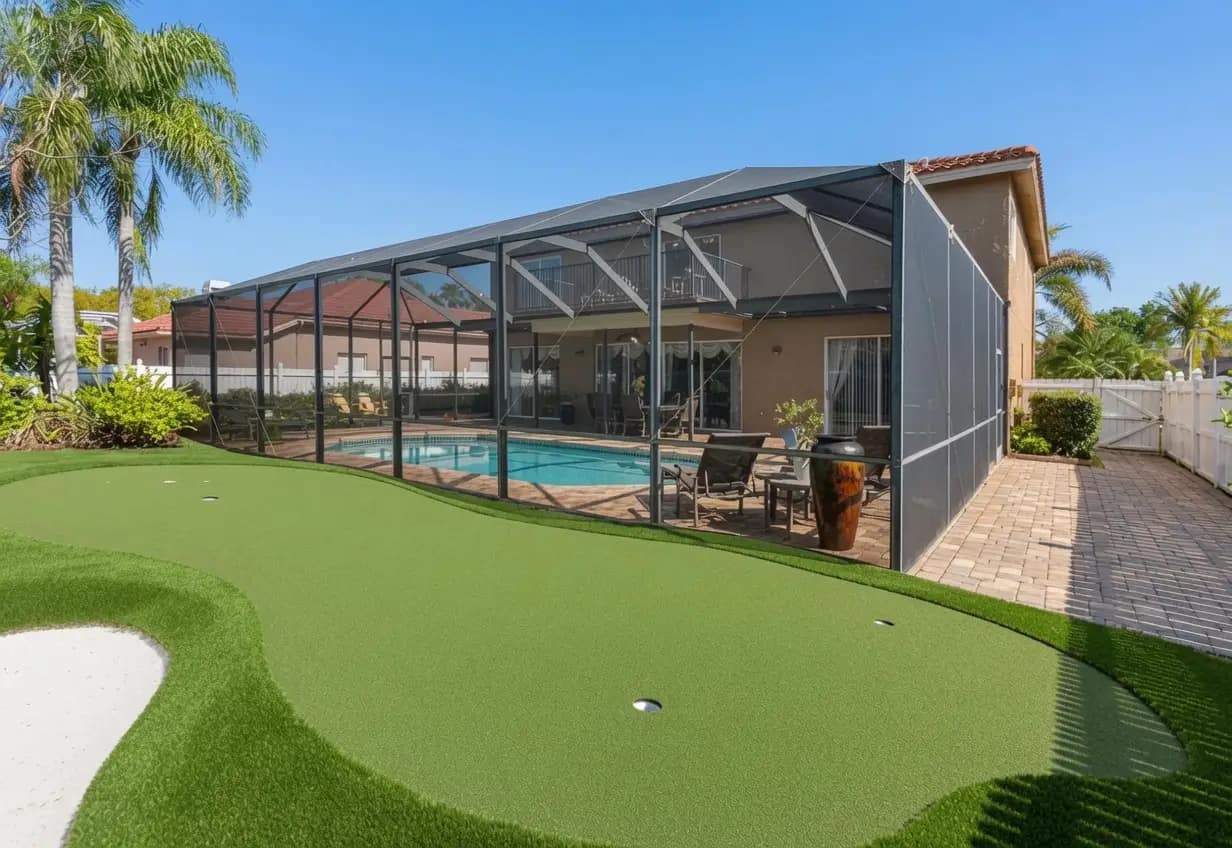
If you scroll through golf forums like Reddit's r/golf, one thread comes up constantly: "Those of you with backyard putting greens... if you had to do it all over again, would you? What would you change?"
As professional green designers and builders at Sims & Greens, we read these discussions with great interest. The consensus among owners is overwhelmingly positive—most golfers say their home green is their favorite feature in the house. However, almost every owner admits to at least one major regret about their initial design or material choice.
Here are the top five lessons real golfers learned after installing home greens, and how to make sure your investment delivers maximum enjoyment and stroke reduction.
1. "I Wish I Had Made It Bigger" (The #1 Owner Regret)
By far, the most common feedback from home green owners is: "I should have built it larger."
When golfers install a small 10x10 ft or 10x15 ft footprint, they quickly realize it limits their practice to short, 8-foot putts. While dialing in 3-to-8-footers is vital for scoring, a small green prevents you from practicing distance control on 15-to-25-foot lag putts or taking longer chips from the fringe.
Expert Tip: Aim for at least 300 to 500+ square feet if space permits. A multi-cup setup across a larger surface allows for varied angles, uphill/downhill breaks, and multi-player putting games during weekend BBQs.
Want to See What Fits in Your Yard?
Let our design team map out a custom synthetic putting green tailored to your space and practice goals.
Design Your Custom Green
2. The Real Grass Nightmares: Fungicides, Reel Mowers & Daily Labor
Every golf purist considers real Creeping Bentgrass or Bermuda grass at first. But golfers who built real grass greens quickly report that it turns into a grueling full-time job.
Maintaining natural greens-grade turf requires:
- A expensive walk-behind reel mower set to sub-0.150 inches.
- Mowing every 24 to 48 hours and daily morning dew brushing.
- Rotating 5+ chemical fungicides to stop dollar spot and pythium blight.
- Monthly top-dressing with screened masonry sand.
According to USGA Green Section guidelines, golf course turf management is one of the most demanding agronomic tasks in agriculture. If you go on a 5-day family vacation in July, you can return to dead, diseased turf. Modern premium synthetic greens deliver true Stimp speeds without a single drop of fungicide or fuel.
3. "Can Synthetic Turf Actually Hold a Pitch or Chip Shot?"
A frequent frustration with cheap DIY turf or basic indoor mats is that golf balls bounce off them like concrete. Golfers ask: "Can I actually hit 15-yard pitch shots onto synthetic grass?"
The answer comes down to sub-base construction and infill system design:
- Crushed Aggregate Sub-Base: A dynamic, compacted aggregate layer absorbs the kinetic energy of a dropping shot.
- Heavy Infill Sand Systems: Round-grain silica sand infill gives the fibers density, allowing the ball to bite and check like natural turf.
- Fringe Turf Integration: Surrounding your green with high-density landscape artificial grass gives you tight-lie chipping zones to practice bump-and-run shots.
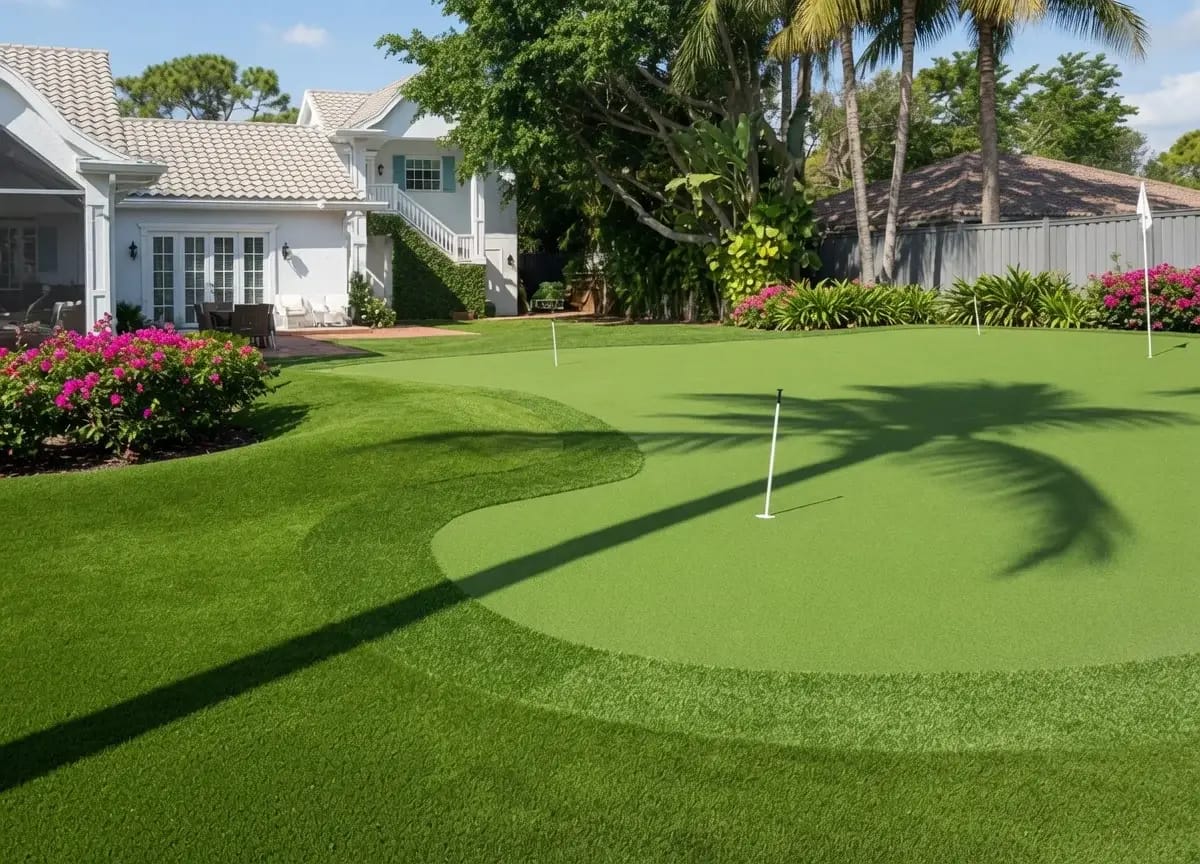
4. Does Having a Home Green Actually Lower Your Handicap?
Data from PGA TOUR ShotLink analytics confirms that putting accounts for approximately 40% of all strokes during a round. Yet, most golfers spend their range sessions blasting drivers into the distance.
Golfers with backyard greens report dropping 2 to 5 strokes off their handicap within the first season. Having a green just steps from your patio allows for 10-minute daily micro-sessions that build muscle memory, alignment discipline, and confidence on 3-to-6-foot putts.
For complete game development, many golfers pair their outdoor putting space with an indoor golf simulator installation for full swing and iron practice.
5. Keep the Slope Subtle: The "Parking Lot vs. Rollercoaster" Balance
Another insight from experienced green owners is contouring. If a green is completely flat like a parking lot, it can feel repetitive over time. But if you add severe, unrealistic slopes, putts become frustrating novelty trick shots.
The ideal design incorporates subtle 1% to 2% breaks, custom cup placements, and multi-tier contours. This ensures you practice real-world course conditions while keeping games competitive when friends and family come over.
Ready to Build Your Backyard Golf Sanctuary?
Avoid the common DIY pitfalls and invest in a tour-grade synthetic green built to last 15+ years. Connect with the Sims & Greens team today for a personalized estimate.


